
You walk out to your parked car and notice a puddle underneath it. Is it…
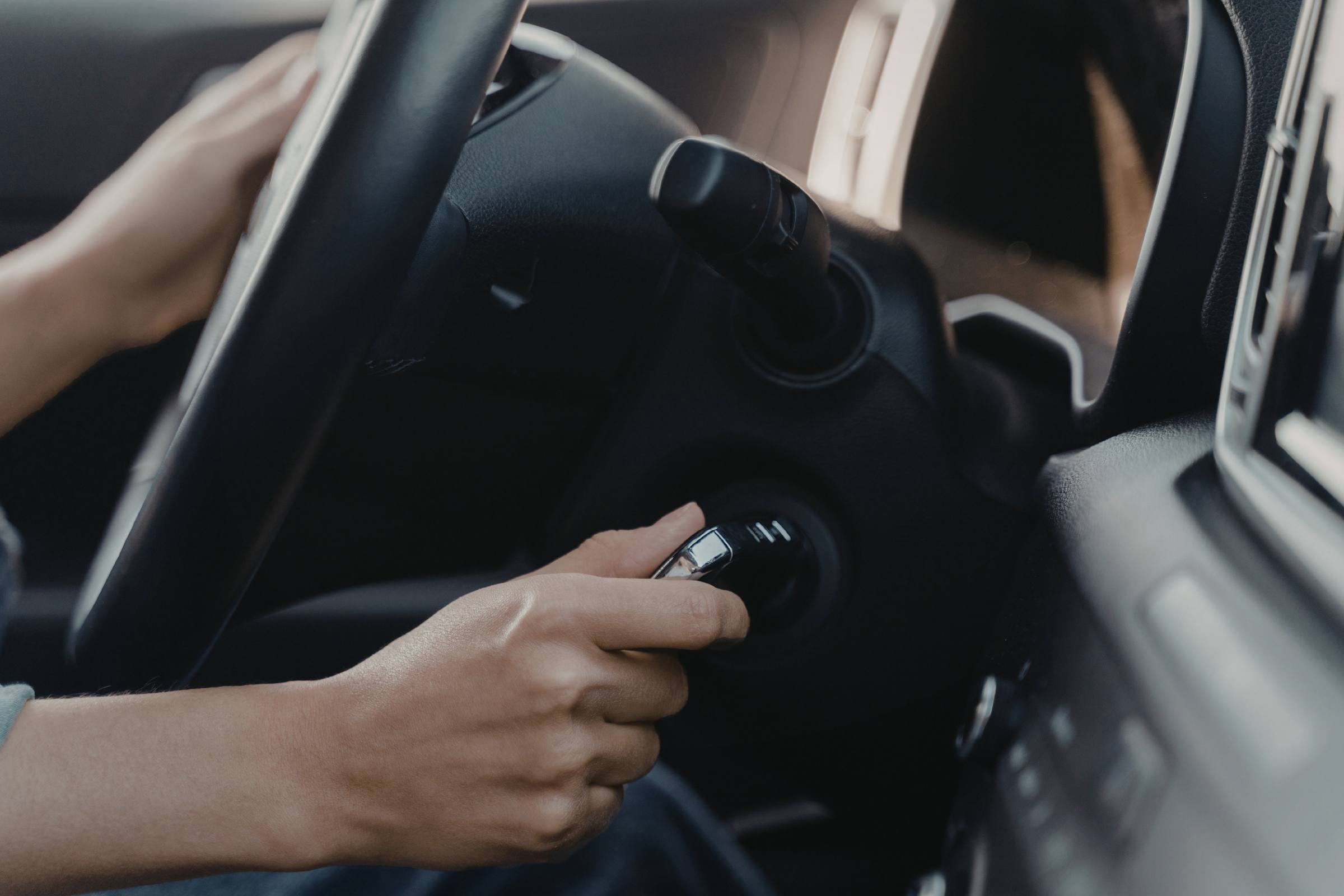
Why Won’t My Car Start? 8 Common Causes and When to Call a Mechanic
You turn the key or press the start button to your car, and nothing happens. Or maybe your car clicks, cranks slowly, or turns over without actually starting. Hmm… So what’s likely going on?
Few vehicle problems are more frustrating than a car that suddenly won’t start, especially when you need to get somewhere.
The good news is that a car that won’t start does not automatically mean you have a major engine problem. Starting problems can originate from the battery, starter, charging system, fuel system, ignition system, electrical connections, sensors, or other components.
The way your vehicle behaves when you try to start it can provide important clues. Here are eight common reasons a car won’t start and how to know when it’s time for professional diagnosis.
1. Weak or Dead Battery
A weak or discharged battery is one of the first possibilities to consider when a vehicle will not start. The battery provides the electrical power needed to operate the starter and other systems during startup. If it cannot provide sufficient power, you may notice:
- Slow engine cranking
- Rapid clicking when you turn the key
- Dim interior or dashboard lights
- Electrical accessories that do not work normally
- No response when attempting to start the vehicle
A battery can become discharged for many reasons, including age, temperature extremes, an electrical component being left on, charging-system problems, or an electrical draw while the vehicle is parked.
A jump-start may get some vehicles running, but it doesn’t explain why the battery lost its charge. If the problem returns, further testing is a better approach than repeatedly jump-starting the vehicle.
2. Starter Motor Problems
What if your lights and accessories work, but the engine still won’t turn over? The starter may be one possibility. The starter motor uses electrical power from the battery to crank the engine. When the starter or its related electrical components develop a problem, you might hear:
- A single click
- Repeated clicking
- An unusual grinding sound
- No cranking at all
However, a clicking noise does not automatically prove that the starter needs replacement. Battery condition, electrical connections, relays, and other components can produce similar symptoms.
Professional vehicle diagnostics can help determine whether the starter is actually responsible before parts are replaced.
3. Alternator or Charging-System Problems
A vehicle may have a relatively healthy battery and still develop repeated starting problems if the charging system isn’t operating correctly.
Once the engine is running, the alternator helps supply electrical power and recharge the battery. If the charging system is not working properly, the battery may gradually lose its charge.
Possible warning signs include:
- Repeated dead batteries
- Battery warning light
- Dim or flickering lights
- Electrical accessories behaving unusually
- Vehicle stalling
- Difficulty restarting after driving
If your battery repeatedly needs a jump, don’t assume the battery itself is always the cause.
Frank’s has also covered the relationship between batteries, alternators, starters, and other components in our guide to common electrical issues in your car.
4. Fuel Delivery Problems
Your engine needs the correct supply of fuel to start and run.
If the engine cranks normally but refuses to start, a fuel-delivery problem may be one possible explanation.
Potential issues can involve components such as:
- Fuel pump
- Fuel injectors
- Fuel-pressure-related components
- Electrical controls
- Fuel delivery system
A fuel-system problem may also cause symptoms before the vehicle reaches a complete no-start condition, such as hesitation, reduced performance, difficult starting, or stalling.
Because these symptoms can overlap with ignition and electronic problems, testing is important before determining what needs repair.
5. Ignition System Problems
A gasoline engine also needs properly timed ignition to start. Depending on the vehicle, problems involving spark plugs, ignition coils, electrical connections, or related components can interfere with combustion.
You may notice:
- Engine cranks but does not start
- Rough running before the no-start condition
- Misfires
- Hesitation
- Loss of power
- Check engine light
Ignition-related problems may also affect emissions and engine performance. If a warning light appeared before your starting problem developed, tell your technician. That information can provide an important diagnostic clue.
6. Faulty Sensors or Electronic Controls
Modern vehicles depend on computers and sensors to control fuel delivery, ignition timing, airflow, security systems, and other functions.
A malfunctioning sensor, electrical circuit, or control-related component can sometimes prevent an engine from starting even when the battery and starter appear to work normally.
This is one reason modern no-start problems can be difficult to diagnose based on symptoms alone.
A technician may need to:
- Scan the vehicle for diagnostic trouble codes
- Review live vehicle data
- Test electrical circuits
- Verify sensor operation
- Check communication between vehicle systems
Frank’s Auto Repair uses professional automotive diagnostic equipment to help identify the source of vehicle problems rather than relying on guesswork.
7. Loose, Corroded, or Damaged Electrical Connections
Sometimes the problem isn’t the battery or starter itself. It’s the electrical connection between components.
Corrosion, loose battery terminals, damaged wiring, poor grounds, or other connection problems can interfere with the current required to start a vehicle.
Symptoms can be intermittent.
Your car may start normally one day and struggle the next. Lights may flicker, electrical systems may behave unpredictably, or the vehicle may suddenly fail to crank.
Intermittent starting problems are especially useful to have diagnosed before they become permanent no-start conditions.
8. Other Mechanical or Security-System Problems
Not every no-start condition fits neatly into one category, unfortunately. Depending on the make, model, and symptoms, starting problems can also involve:
- Anti-theft or immobilizer systems
- Key or key-fob recognition
- Engine mechanical problems
- Timing-related issues
- Relays or fuses
- Wiring faults
- Other vehicle-specific systems
This is why replacing the battery, starter, or alternator based solely on a symptom can become expensive if that component isn’t actually causing the problem.
Car Clicks but Won’t Start: What Does It Mean?
This is one of the most common starting complaints. If your car clicks but won’t start, the sound can provide a clue, but it isn’t a diagnosis by itself. Rapid clicking may occur when there isn’t sufficient electrical power reaching the starter. A single click with no engine cranking can point toward a different starting-circuit issue.
Possible causes include the battery, starter, connections, wiring, or related electrical components.
Testing the starting and charging systems can help determine the actual cause.
Car Cranks but Won’t Start: What Does It Mean?
This is a different symptom. If the engine is turning over at a normal speed but never starts, the starter is already doing its primary job of cranking the engine.
The diagnostic focus then shifts toward what the engine needs to run, including:
- Fuel
- Ignition
- Air
- Correct electronic inputs
- Proper mechanical operation
A car that cranks but won’t start can therefore require a different diagnostic approach than a vehicle that does not crank at all.
What If My Car Won’t Start but the Battery Is Good?
A good battery rules out only one possibility.
Your vehicle still relies on the starter, electrical circuits, charging system, fuel delivery, ignition components, sensors, security systems, and mechanical components to start successfully.
If the battery has been properly tested and the vehicle still won’t start, further diagnosis is usually the most efficient next step.
Avoid repeatedly replacing components based on guesses. The goal should be to isolate the failed system first.
Why Does My Car Start Sometimes but Not Others?
An intermittent starting problem can be particularly frustrating because the vehicle may behave normally by the time it reaches a repair shop.
Possible intermittent problems can involve:
- Electrical connections
- Starter components
- Battery condition
- Sensors
- Relays
- Ignition components
- Fuel-delivery components
Pay attention to the circumstances when the problem occurs.
Does it happen when the engine is hot? First thing in the morning? After the vehicle sits for several days? Do you hear clicking? Does the engine crank normally?
Those details can help with diagnosis.
Can Cold or Hot Weather Cause Starting Problems?
Extreme temperatures can expose weaknesses in vehicle systems that were already developing.
Cold weather can reduce battery performance and make an already weak battery more noticeable. Heat can also affect batteries and electrical components over time.
New Jersey’s seasonal temperature changes make regular car maintenance particularly useful for identifying aging batteries and other developing issues before they result in a no-start situation.
Weather may expose the problem, but recurring starting trouble still deserves investigation.
Should I Keep Trying to Start a Car That Won’t Start?
Probably not, despite what horror movies would have you believe.
Repeatedly attempting to start the vehicle usually isn’t the best strategy. If the engine does not start after reasonable attempts, continued cranking can drain the battery and may place additional strain on starting components.
Stop and seek professional help if you notice:
- Grinding or unusual mechanical sounds
- Smoke
- Strong fuel odors
- Burning smells
- Repeated electrical failure
- Severe clicking with no start
- Other unusual symptoms
If the vehicle cannot be operated safely, avoid attempting to drive it simply because you manage to get it started once.
How Does a Mechanic Diagnose a Car That Won’t Start?
Good no-start diagnosis starts with the symptom. A technician may first determine whether the engine:
- Does not crank
- Cranks slowly
- Cranks normally but won’t start
- Starts and immediately stalls
- Starts intermittently
From there, testing may include the battery, charging system, starter circuit, electrical system, fuel delivery, ignition system, diagnostic trouble codes, and other components depending on what the technician finds.
This process helps identify the actual cause before recommending repairs.
Don’t Let a Starting Problem Leave You Stranded
A car that occasionally struggles to start can eventually become a car that doesn’t start at all.
If you’ve noticed slow cranking, repeated clicking, intermittent starting, warning lights, or other changes, having the problem inspected before the vehicle leaves you stranded can save time and frustration.
Frank’s Auto Repair provides professional auto repair and diagnostics for drivers in Fanwood and surrounding New Jersey communities. Whether the problem is electrical, mechanical, fuel-related, or something less obvious, identifying the cause is the first step toward getting your vehicle reliably back on the road.
Schedule a No-Start Diagnostic With Frank’s Auto Repair
So as you can tell, a car not starting can have any number of underlying potential problems. If you’re not automotive inclined, we’d recommend consulting a professional.
Car won’t start, clicks when you turn the key, or has become increasingly difficult to start? Don’t guess which part needs replacing.
Let Frank’s Auto Repair diagnose the source of the problem and recommend the appropriate repair.
Schedule an appointment with Frank’s Auto Repair in Fanwood, NJ.
Frequently Asked Questions
Why won't my car start even though the lights come on?
Interior and dashboard lights require less electrical power than the starter motor, so lights can sometimes operate even when there isn’t enough battery power to crank the engine properly. Starter, connection, electrical, fuel, ignition, and other problems can also cause a no-start condition.
Why is my car clicking but not starting?
Clicking can indicate insufficient electrical power reaching the starter, a battery or connection problem, a starter-circuit issue, or another electrical fault. Testing is needed to determine the exact cause.
Why does my car crank but not start?
If the engine cranks but won’t start, possible causes include fuel-delivery problems, ignition faults, sensor or electrical problems, security-system issues, or mechanical problems.
Can an alternator cause a car not to start?
Yes. If the charging system fails to keep the battery sufficiently charged, the vehicle may eventually lack enough electrical power to start. However, a no-start condition should be tested before assuming the alternator is responsible.
When should I take my car to a mechanic for starting problems?
Schedule an inspection if your vehicle repeatedly struggles to start, cranks slowly, clicks without starting, starts intermittently, requires frequent jump-starts, or cranks normally but won’t run. Diagnosing an intermittent problem early may help prevent an unexpected breakdown.
Related Posts