
You turn the key or press the start button to your car, and nothing happens.…
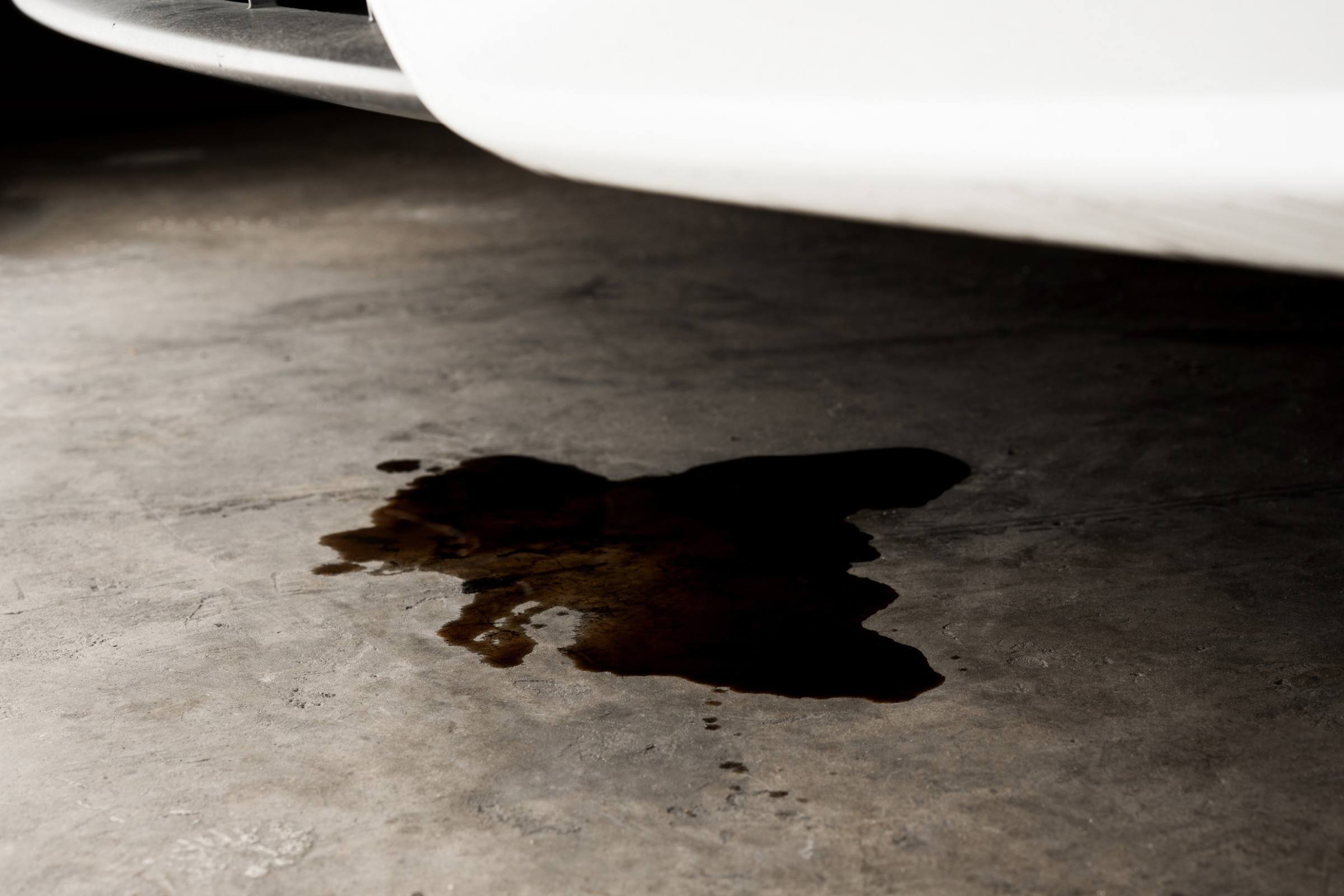
Liquid Leaking From Your Car? How to Identify Common Vehicle Fluid Leaks
You walk out to your parked car and notice a puddle underneath it. Is it water from the air conditioner, or is your vehicle leaking something that needs immediate attention?
Seeing an unfamiliar liquid leaking from your car can be concerning, but not every puddle means something is seriously wrong. Your vehicle uses several different fluids, and the appearance, consistency, smell, location, and accompanying symptoms can provide clues about what may be leaking.
Common vehicle fluid leaks can involve engine oil, coolant, transmission fluid, brake fluid, power steering fluid, fuel, or even harmless water from the air conditioning system.
The important part is knowing which leaks can wait for an inspection and which ones should be treated as urgent.
How Can I Tell What Fluid Is Leaking From My Car?
Start by looking at the liquid without touching it unnecessarily.
Pay attention to:
- Where the puddle appears underneath the vehicle
- Whether the liquid is clear, dark, or brightly colored
- Whether it looks watery or oily
- Whether there is a noticeable odor
- How large the puddle is
- Whether the leak returns after the vehicle is moved
- Whether any dashboard warning lights are illuminated
Fluid color can be helpful, but color alone should never be treated as a diagnosis. Automotive fluids vary between manufacturers, formulations, age, and condition.
The location of the leak and changes in how your vehicle operates can be just as important.
Quick Guide to Common Vehicle Fluid Leaks
| Possible Fluid | Common Appearance | Other Clues |
| Engine oil | Amber, brown, or black | Oily consistency, declining oil level |
| Coolant | Color varies by coolant type | Overheating, temperature warning, distinctive odor |
| Transmission fluid | Color varies by vehicle and condition | Shifting problems, slipping, delayed engagement |
| Brake fluid | Clear, amber, or darker with age | Changes in braking performance |
| Power steering fluid | Varies by vehicle | Steering noise or increased steering effort |
| Fuel | Clear to lightly colored | Strong fuel odor |
| A/C condensation | Clear water | Often appears after using air conditioning |
This guide can help narrow down the possibilities, but the safest way to identify an unexplained automotive leak is to find its actual source.
1. Engine Oil Leak
An oil leak under your car is one of the more recognizable automotive leaks.
Fresh engine oil is typically amber or brown, while older oil may appear dark brown or black. It usually has a slick, oily consistency.
Oil leaks can develop from numerous seals, gaskets, housings, and connections throughout the engine.
Possible clues include:
- Dark spots where you regularly park
- Oil level dropping between services
- Burning-oil smell
- Smoke if oil reaches a hot surface
- Oil warning light in certain situations
A few drops may not look serious, but an ongoing leak can gradually reduce the engine’s oil level.
Engine oil lubricates and protects internal engine components. Driving with insufficient oil can result in serious engine damage.
If you’ve noticed recurring oil spots, include an oil-level and leak inspection as part of your vehicle maintenance rather than simply adding oil indefinitely.
2. Coolant Leak
Coolant circulates through the engine and cooling system to help regulate operating temperature.
Depending on the coolant used in your vehicle, a leak may appear in various colors. This is another reason not to identify automotive fluids based solely on color.
Possible signs of a coolant leak include:
- A puddle underneath the vehicle
- Coolant level repeatedly dropping
- Temperature gauge running hotter than normal
- Temperature warning light
- Steam from the engine compartment
- A distinctive sweet odor
Coolant leaks can originate from hoses, the radiator, water pump, reservoir, connections, or other cooling-system components.
A cooling system that cannot maintain the proper coolant level may eventually allow the engine to overheat.
If your temperature gauge is rising or the vehicle is actively overheating, continuing to drive can risk significant engine damage.
3. Transmission Fluid Leak
Transmission fluid helps lubricate, cool, and operate components within many transmission designs.
The appearance of transmission fluid varies depending on the vehicle, fluid specification, age, and condition. It should not automatically be identified as “red fluid” because not every transmission uses fluid that looks the same.
A transmission fluid leak may be accompanied by symptoms such as:
- Delayed gear engagement
- Rough shifting
- Transmission slipping
- Unusual drivetrain noises
- Changes in transmission performance
A leak does not automatically mean the transmission itself needs replacement.
Seals, lines, connections, pans, and other components can potentially be involved, depending on the transmission design.
If you notice both a fluid leak and shifting problems, read our guide to transmission repair vs. replacement and have the vehicle properly diagnosed before assuming a major transmission repair is necessary.
You can also learn more about Frank’s transmission services.
4. Brake Fluid Leak
A suspected brake fluid leak should be treated seriously because brake fluid is essential to the hydraulic operation of the braking system.
Possible warning signs may include:
- Fluid around a wheel or underneath the vehicle
- Brake pedal feeling unusually soft
- Brake pedal behavior changing
- Brake warning light
- Noticeable changes in braking performance
Do not rely on fluid color alone to determine whether a leak involves the braking system.
If you suspect brake fluid is leaking or the brake pedal suddenly feels different, avoid treating the problem like an ordinary maintenance issue. The braking system should be professionally inspected.
5. Power Steering Fluid Leak
Some vehicles use hydraulic power steering systems that depend on fluid to provide steering assistance. Many newer vehicles use electric power steering instead and therefore do not have conventional power steering fluid.
On vehicles with hydraulic systems, a leak may be accompanied by:
- Increased steering effort
- Whining or groaning noises while turning
- Fluid underneath the vehicle
- Low power steering fluid
- Changes in steering feel
Because fluid specifications and system designs vary considerably between vehicles, avoid adding an unidentified fluid simply because a reservoir appears low.
The correct fluid and the source of the leak should be determined first.
6. Fuel Leak
A suspected fuel leak requires immediate attention.
Gasoline has a strong, recognizable odor and is highly flammable. If you smell fuel around your vehicle or suspect gasoline is leaking, avoid smoking, open flames, sparks, and other ignition sources near the vehicle.
Do not continue driving a vehicle with a suspected active fuel leak.
Fuel odors can have different causes, but an actual fuel leak should be inspected promptly.
If you’re uncertain where an odor or leak is coming from, professional automotive diagnostics can help identify the source.
7. Clear Water From the Air Conditioner
Here’s the good news: not every liquid underneath your car is a leak that needs repair.
When your air conditioning system operates, moisture can condense and drain underneath the vehicle. This can create a small puddle of clear water after the A/C has been running, particularly on warm or humid days.
A/C condensation is generally normal.
If the liquid is clear, odorless water and appears after using the air conditioning system, it may simply be condensation.
However, if you are unsure whether you’re looking at water or another automotive fluid, an inspection can provide peace of mind.
Why Is My Car Leaking Fluid After It’s Parked?
Some leaks are easiest to notice after a vehicle has been parked because the fluid has time to collect underneath it.
The location of the puddle can sometimes help a technician narrow down the source, but fluids can travel along protective covers, frames, hoses, and other components before reaching the ground.
That means a puddle’s location does not always correspond directly with the failed component above it.
For example, fluid may originate near the front of the engine and travel backward before dripping onto the pavement.
Finding the highest point where fresh fluid is present is often more useful than looking only at where the puddle forms.
Is It Safe to Drive a Car That’s Leaking Fluid?
It depends entirely on what is leaking, how much fluid has been lost, and whether the leak is affecting a safety-critical or mechanical system.
Some moisture, such as normal A/C condensation, is harmless.
Other leaks may require prompt attention.
Be particularly cautious with suspected:
- Brake fluid leaks
- Fuel leaks
- Significant engine oil loss
- Significant coolant loss
- Transmission fluid loss
- Leaks accompanied by overheating
- Leaks accompanied by braking or steering problems
If the vehicle has a warning light, is overheating, smells strongly of fuel, has lost braking ability, or is behaving abnormally, do not assume it is safe to continue driving.
Can a Small Fluid Leak Turn Into a Bigger Repair?
Yes, depending on what is leaking.
A small leak may gradually lower a critical fluid level. In other cases, a minor seal or connection problem can become worse over time.
Ignoring a leak can also make diagnosis more difficult if fluid spreads across surrounding components.
Catching a leak early may provide an opportunity to address its source before fluid loss contributes to additional problems.
This is why checking for leaks is an important part of preventative car maintenance.
Why Does My Car Smell Like Burning Oil?
If engine oil or another automotive fluid leaks onto a hot engine or exhaust component, you may notice a burning smell.
You might smell it while driving, immediately after parking, or when standing near the vehicle.
A burning smell should not automatically be assumed to be an oil leak, however. Several vehicle problems can create unusual odors.
If the smell is persistent, accompanied by smoke, or occurs along with a visible leak, have the vehicle inspected.
Why Is My Car Leaking Fluid but No Warning Light Is On?
A dashboard warning light does not appear for every vehicle fluid leak.
Your vehicle’s computers monitor many systems, but they cannot necessarily detect a small external leak as soon as it begins.
You may notice a puddle or declining fluid level well before a warning light appears.
Conversely, a warning light may illuminate only after the fluid loss begins affecting system operation.
Visible evidence of a recurring leak is therefore worth investigating even if the dashboard appears normal.
How Does a Mechanic Find a Vehicle Fluid Leak?
The goal isn’t simply to identify what’s dripping onto the ground. The technician needs to determine where the fluid is escaping and why.
Depending on the suspected system, diagnosis may involve:
- Inspecting fluid levels and condition
- Examining hoses and connections
- Looking for wet or stained components
- Inspecting seals and gaskets
- Checking reservoirs
- Inspecting the underside of the vehicle
- Testing the affected system
- Using diagnostic equipment when related symptoms are present
Some leaks are immediately visible. Others occur only when the engine is running, the vehicle reaches operating temperature, pressure builds within a system, or a particular component operates.
Professional vehicle diagnostics can help distinguish the source of a leak from the place where the fluid eventually reaches the ground.
Should I Use a Stop-Leak Product?
A stop-leak product is not a universal solution for automotive fluid leaks.
Different systems use different fluids, materials, pressures, and component designs. Adding an inappropriate product can fail to solve the actual problem and may create additional complications.
The better approach is to identify:
- Which fluid is leaking
- Where it is leaking from
- Why the component is leaking
- What repair is appropriate for that specific vehicle
That allows the underlying problem to be addressed rather than simply attempting to mask the symptom.
When Should I Get a Vehicle Fluid Leak Checked?
Schedule an inspection when:
- A puddle repeatedly appears underneath your vehicle
- Fluid levels keep dropping
- You smell fuel or burning fluid
- Your vehicle begins overheating
- Steering or braking behavior changes
- Your transmission begins shifting differently
- A dashboard warning light appears
- The leak is becoming larger
- You cannot determine what the liquid is
You don’t have to know exactly what is leaking before bringing the vehicle to a repair shop. Identifying the source is part of the diagnostic process.
Don’t Ignore an Unexplained Leak
Finding liquid underneath your car doesn’t always mean you’re facing a major repair, but it does deserve attention if the leak is recurring or involves an important vehicle system.
The sooner you identify the fluid and its source, the sooner you can determine whether you’re seeing harmless condensation, a minor repair issue, or a problem that should be addressed immediately.
Frank’s Auto Repair provides diagnostics, maintenance, and auto repair services for drivers in Fanwood and surrounding New Jersey communities.
Found Liquid Under Your Car? Schedule an Inspection
Not sure what’s leaking from your vehicle? Don’t wait for a small puddle to become a larger problem. Frank’s Auto Repair can inspect the vehicle, identify the source of the leak, and explain what repairs are needed.
Schedule an appointment with Frank’s Auto Repair in Fanwood, NJ.
Frequently Asked Questions
What are the most common fluids that leak from a car?
Common vehicle fluid leaks include engine oil, coolant, transmission fluid, brake fluid, and power steering fluid on vehicles equipped with hydraulic power steering. Fuel can also leak, while clear water underneath a vehicle may simply be normal A/C condensation.
How can I tell what liquid is leaking from my car?
Look at the liquid’s general appearance, consistency, odor, location, and any symptoms the vehicle is experiencing. Because automotive fluid colors vary, the most reliable approach is to locate the actual source of the leak.
Is it safe to drive if my car is leaking fluid?
It depends on the fluid and severity of the leak. A/C condensation can be normal, while suspected fuel or brake fluid leaks, major oil or coolant loss, overheating, or changes in steering and braking may make continued driving unsafe.
Why is there clear liquid leaking from under my car?
Clear, odorless water underneath a vehicle is often condensation from the air conditioning system, especially after using the A/C in warm or humid weather. If you’re uncertain about the liquid or it has an unusual smell or texture, have it checked.
How much does it cost to fix a fluid leak in a car?
Repair cost depends on which fluid is leaking, where the leak originates, the vehicle, the failed component, parts required, and labor involved. A proper inspection is needed before an accurate repair estimate can be provided.
Related Posts