
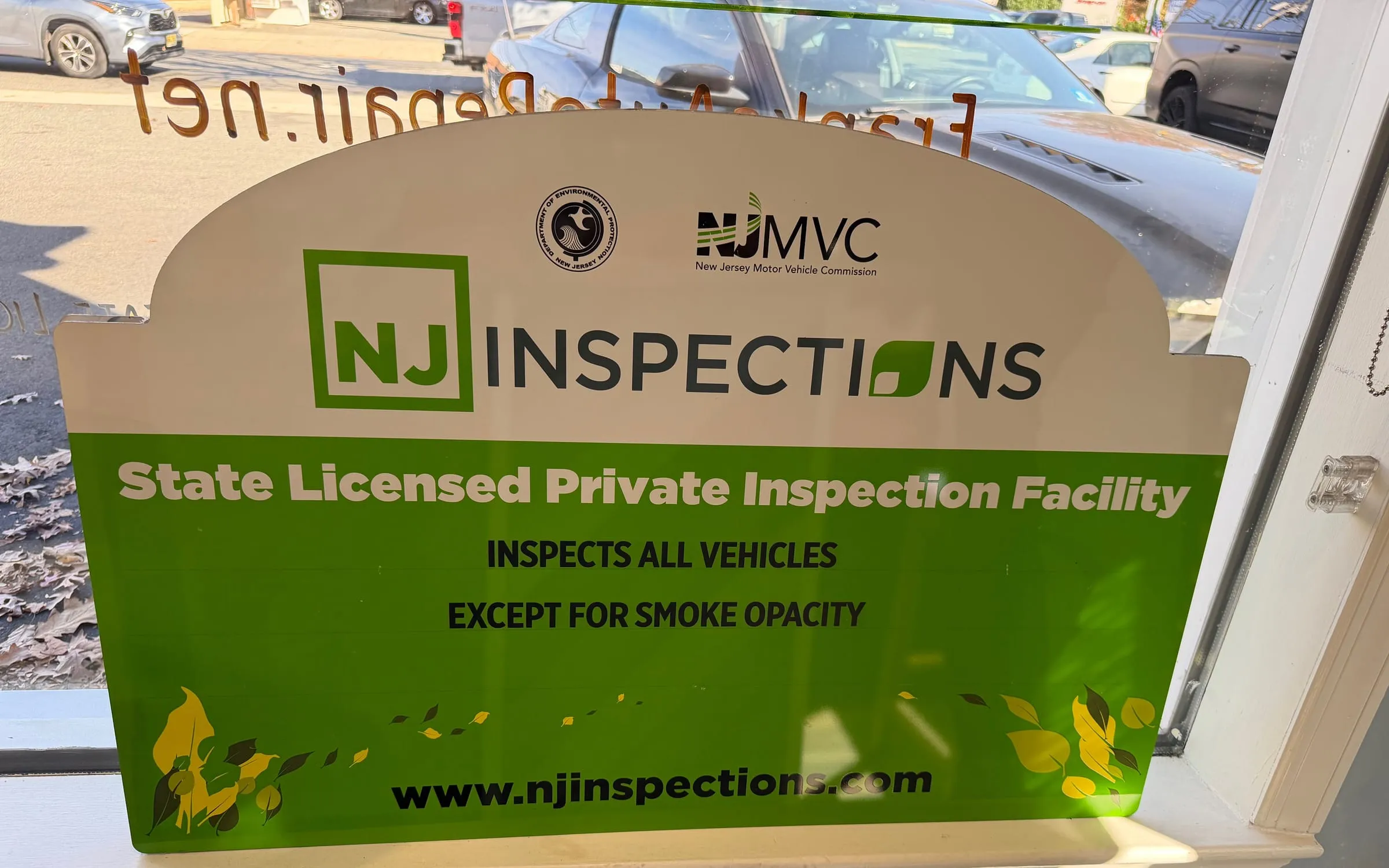
Passing your NJ state inspection is essential for staying compliant, legal and safe on the road, yet many drivers fail because of very preventable issues. Frank’s Auto Repair is a NJ licensed emission repair facility. That means if your vehicle has failed NJ state inspection, we are licensed and able to repair it so it can pass.
NJ state inspections
NJ state inspections are required every two years, and new cars don’t require an inspection for their first five years. Please bring your driver’s license, registration and insurance card. Note that vehicles must be registered every year.
Emissions testing remains a major factor in whether your vehicle passes or fails. If you’re unsure whether your car is ready, a pre-inspection check can find problems early.
Why cars fail NJ inspection
- An active check engine light. It usually indicates an emissions-related issue, and even a minor sensor problem can trigger a failure. Our check engine light diagnostics page covers the most common causes.
- A faulty oxygen sensor. Oxygen sensors monitor fuel efficiency and emissions output. Signs of failure include poor gas mileage, rough idling and increased emissions.
- Catalytic converter issues. The converter turns harmful gases into less toxic emissions. It’s expensive, but critical to passing inspection, and often linked to the check engine light.
- A loose or damaged gas cap. One of the simplest yet most overlooked reasons. A loose cap, or another evaporative (EVAP) system leak such as a cracked hose, can trigger emissions system errors.
- A dead or weak battery. A recently disconnected or weak battery can reset your vehicle’s system, leaving the emissions monitors “not ready”, which can mean an automatic failure.
- Exhaust system problems. Leaks or damage in the exhaust system mean more noise, lower fuel efficiency and higher emissions.
How to prepare for inspection
- Fix any check engine light immediately.
- Make sure your gas cap is tight and undamaged.
- Drive your car regularly before inspection, so the monitors reset.
- Stay consistent with routine maintenance.
- Address any known performance issues.
For peace of mind before you head to inspection, schedule an appointment for a full pre-check. Our post on the most common reasons cars fail NJ state inspections goes into more detail.
If your car failed inspection
If your car failed inspection and you’d like us to take a look and give you an estimate on the necessary repair, we’ll need the failure papers you received at the inspection facility. Bringing that paperwork helps you save money by avoiding unnecessary emissions repairs, so we target only the work you need.
Replacing random parts rarely solves emissions problems, so we diagnose the actual cause first. Common emissions repairs include oxygen sensor replacement, catalytic converter replacement, EVAP system repairs, spark plug replacement and fuel injector cleaning.
Continuing to drive with an active emissions problem may cause additional engine damage, reduced fuel economy and catalytic converter failure, so addressing it promptly is almost always the more cost-effective decision. Read more in our post on emissions repair in New Jersey.