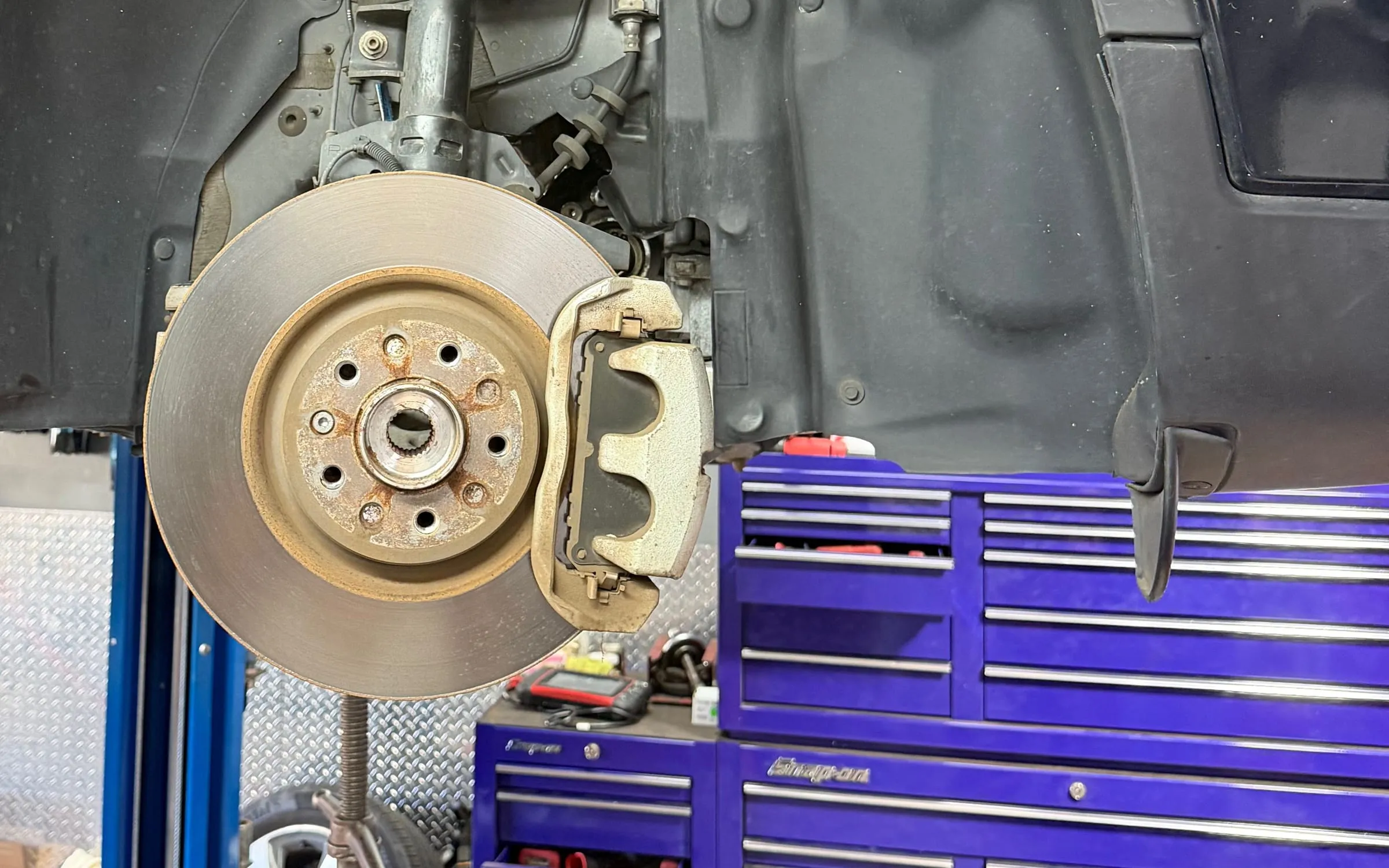
Frank’s Auto Repair performs all brake services, including pads, rotors, drums, calipers and hoses. Your brakes are one of your vehicle’s most important safety systems, and frequent braking in traffic-heavy areas like New Jersey can wear them out faster.
Signs you need brake service
Brake pads typically last 25,000 to 70,000 miles, depending on your driving habits and conditions. It’s time for a brake inspection if you notice:
- squeaking or grinding
- vibration when braking
- longer stopping distances
- a soft or spongy brake pedal
- a brake warning light on the dashboard
Our post on how long car parts last covers brakes and the other parts that wear out fastest.
Brake fluid flush
Brake fluid can become dirty or have moisture in it, which can cause rust. Both of these conditions can lead to a braking system with compromised effectiveness. I recommend this service approximately every 30,000 miles, or sooner if the fluid is contaminated or dirty upon inspection.
Brake fluid absorbs moisture from the air over time, and as it does, its boiling point drops. During heavy braking that moisture can vaporize, creating air pockets that cause brake fade and make it harder to stop when you need to most. Moisture also leads to rust and corrosion inside the brake lines, calipers, wheel cylinders, ABS components and master cylinder. Replacing brake fluid is relatively inexpensive compared with repairing those parts. Read more in what happens if you don’t change and flush your brake fluid.
Brake warning light
If this light is on all the time, you may have forgotten to release the parking brake. If it stays on after the parking brake is released, or comes on when you apply the brakes, something is wrong with the braking system. Hydraulic pressure has been lost on one side of the system, or the brake fluid level is dangerously low, which can be caused by a leak.
Adding fluid may make the light go out for a while, but once the new fluid has leaked out, it comes on again. This is potentially dangerous, because it can cause the brakes to fail, and the leaking fluid can contaminate the brake linings and make them slippery. Have the system checked immediately.
ABS light
If the ABS (anti-lock brake system) light comes on, there’s a fault in the system: it has failed its self-diagnosis test. There may be metal shavings or dirt on the sensors, or you may have a faulty sensor. Definitely have it checked by a qualified technician.
To have your brakes looked at, request an appointment.